

Duck tongue, pig tails and monkfish liver, oh my. Sunday night was an evening of “firsts” for me. “I’ll try everything once,” is my motto when dining abroad. Fortunately, I only had to travel four hours to try some animal parts I didn’t know were actually edible.
Blind Pig is Asheville’s first underground supper club, organizing for important and local charities and infusing local art and music with culinary craft. The chefs got crafty, alright. I attended the most recent Blind Pig dinner on Sunday night, “Another Offal Experience.” Finally, a reason for diners to feel good about eating cod sperm sack; the dinner benefited a local charity, Mountain Housing Opportunities of Asheville.
Well-crafted offal dishes were prepared by a group of chefs at the Blind Pig’s underground dinner, which was held at Biscuit Head for the evening. Chef Matt Dawes of The Bull and Beggar joined Chef Jeremy Hardcastle to create this offal experience.
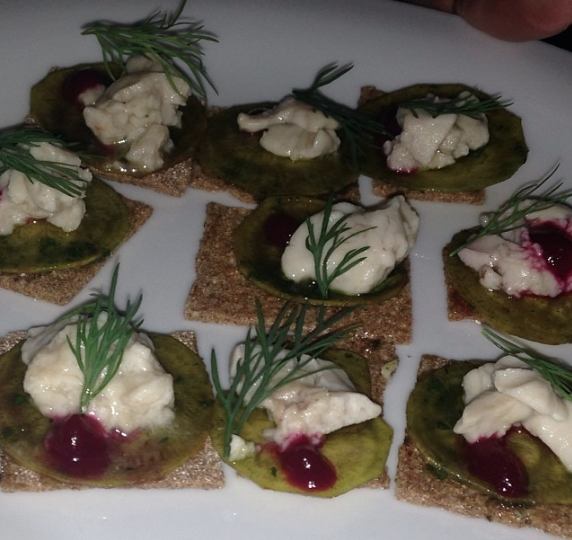
Before the full menu was served, we received a variety of appetizers. Blind Pig has a “BYOB” policy. I was thankful to be sipping on a Wicked Weed beer when our server told us the first appetizer consisted of cod fish sperm sack, tarragon, beet and dill on a wafer. The colors were beautiful and I learned that cod sperm sack is a favorite Japanese winter delicacy called, “shirako.”
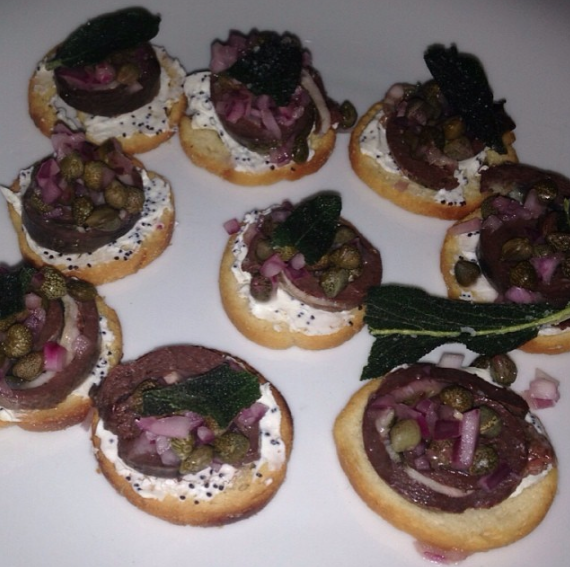
Up next was another appetizer, Chef Matt Dawes’ take on a Jewish deli bagel. A crisp bagel chip was topped with rolled pig spleen, poppyseed cream cheese, caper, red onion and fried sage.
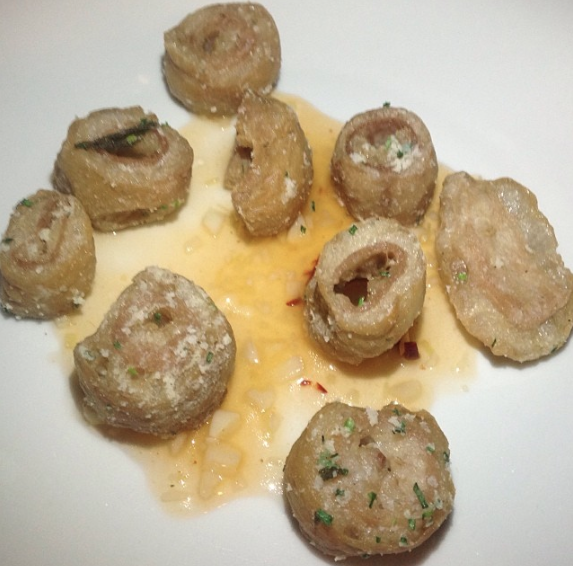
The most shocking dish to our table was the crispy fried pig anus, buttermilk chive powder and sweet chili sauce. No one at the table had ever eaten pig anus, however, it’s a common dish at restaurants all over the world. It looked like fried calimari and I probably wouldn’t have known the difference if my server didn’t tell me.
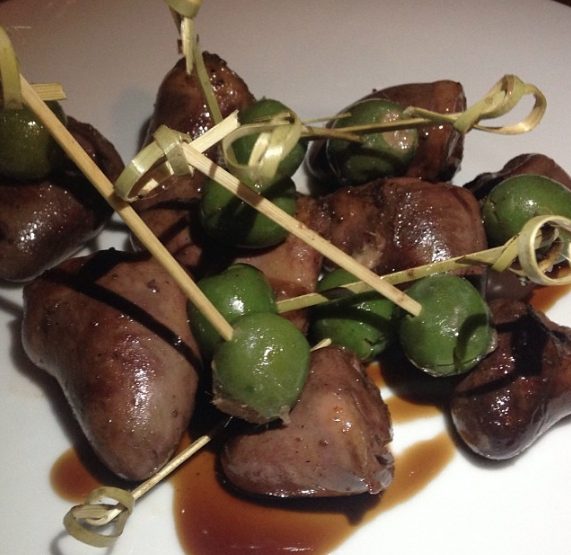
Seared duck heart was served next on a skewer with an anchovy stuffed olive. Honestly, this dish was a challenge for me to eat. Perhaps it was a texture issue.
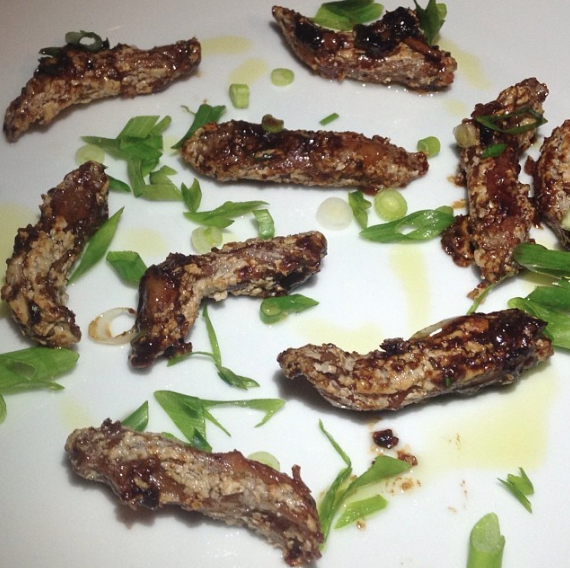
Our table enjoyed the crispy fried duck tongue. The tongue was served with scallions and a black bean and ginger sauce.
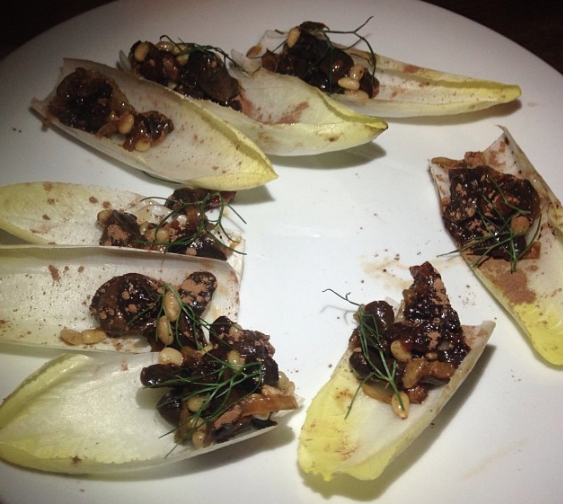
Pig uterus was another startling dish of the evening. The dish included sweet and sour pig uterus, Belgian endive, pine nuts, fresh dill and cocoa powder.
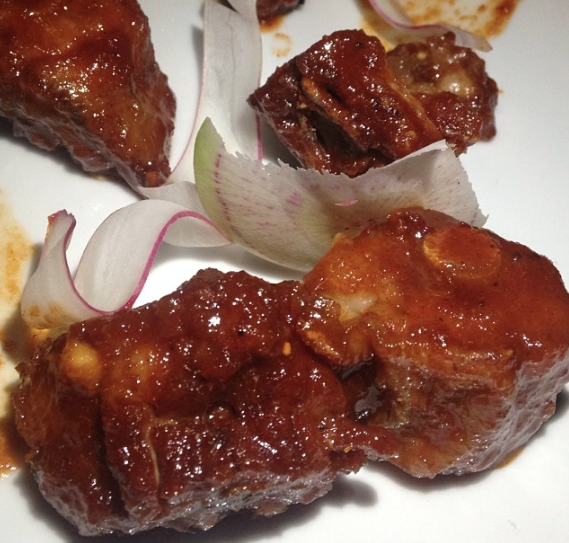
The BBQ pig tail with clove barbecue sauce and radish was one of my personal favorites of the appetizers.
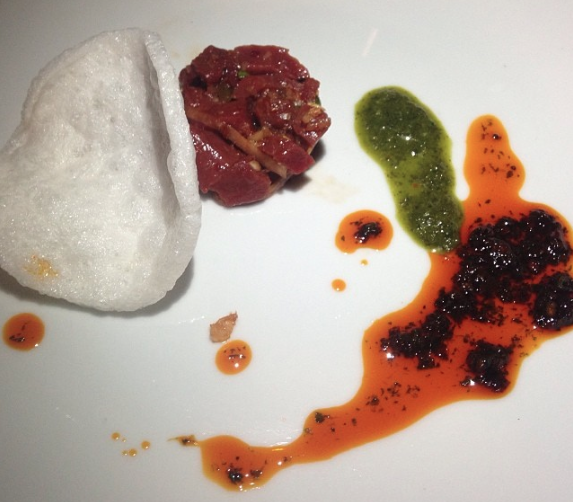
Beef heart tartare was then served with a shrimp cracker, nam phrik and herb oil. I enjoyed the Asian flavors of this dish. Plus, I’m a huge fan of beef tartare. But I must say beef heart tartare was a first for me.
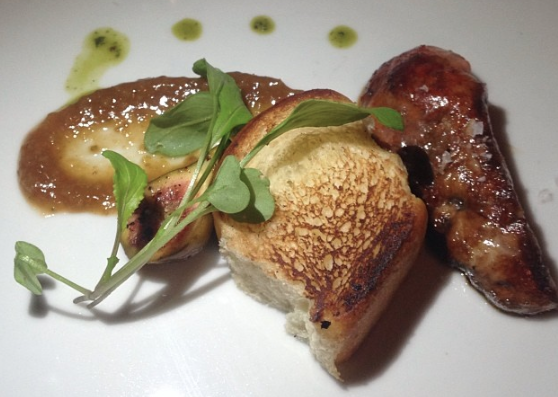
Ankimo, the liver of a monkfish, is the greatest delicacy of Japanese cuisine and is becoming popular in many sushi bars. The Blind Pig offal dinner featured seared monkfish liver with brioche, fig, tarragon oil and onion puree.
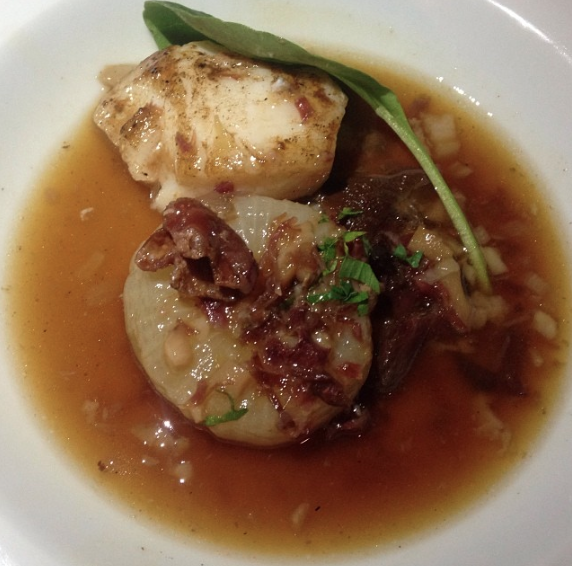
Luckily, fish cheek wasn’t a foreign concept to me. I learned to appreciate fish cheek at a restaurant in Charleston last year. It was nice to see halibut cheek on the menu, which was served with cipollini, pork trotter jus, fish maul and lovage. Eating the fish cheek was like a breath of fresh air amidst the sperm sack and uterus dishes.
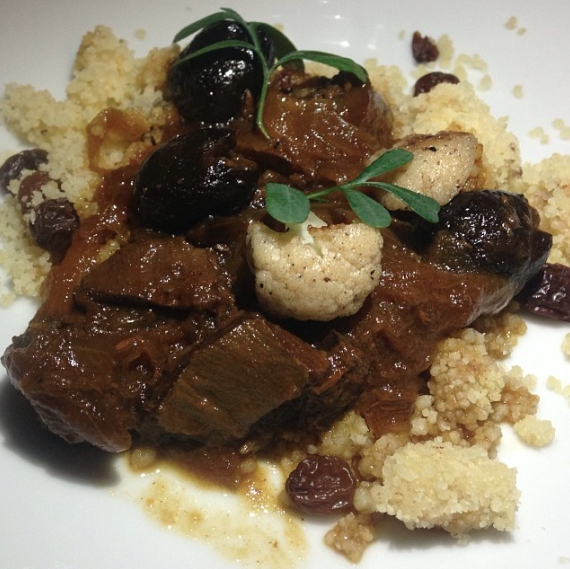
Tagine of tripe, cous cous, black olive, cauliflower and medieval herb rue were served next. I enjoyed the Blind Pig’s spin on a traditional African dish.
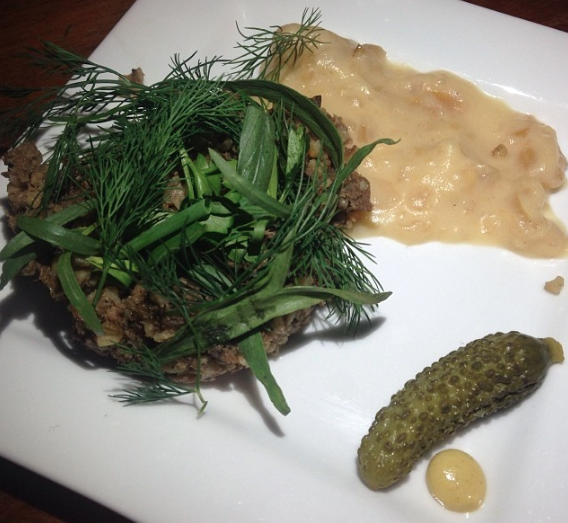
Scottish haggis, clapshot, cornichon and fines herbes was another favorite among the diners at my table. This dish stirred up much conversation of past travels and unique dishes tasted while in Scotland.
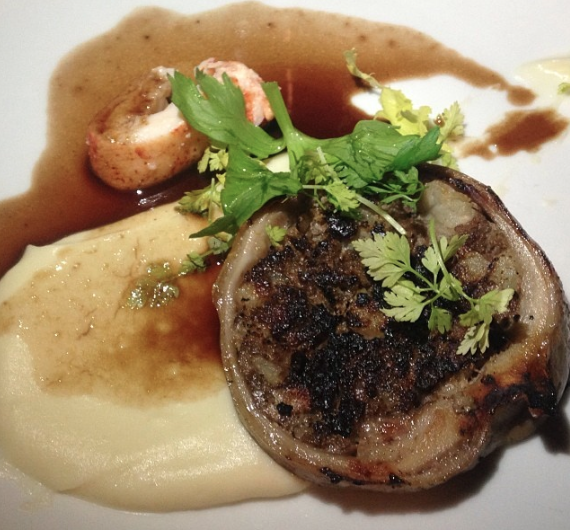
Saumagen, celeriac puree, lobster, chervil and sauce bordelaise served as our last course before dessert.
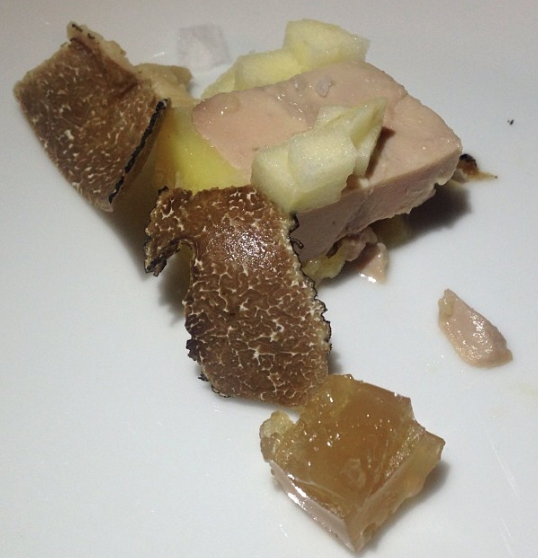
Finally, the moment we had all been waiting for, a sweet ending. Foie gras terrine, fresh apple, cider gelee and black truffle made it’s way to dessert.
So, would I go to another offal dinner? Sure. I’m adventurous and my current mission is to eat my way around the world. It’s crucial to keep an open mind about food. Other cultures around the world may find value in parts of the animal that we think is trash. The Blind Pig’s offal dinner allowed me to realize that culinary creativity and respect for all ingredients is important.
 gadaboutfood
 35
35 3
3